
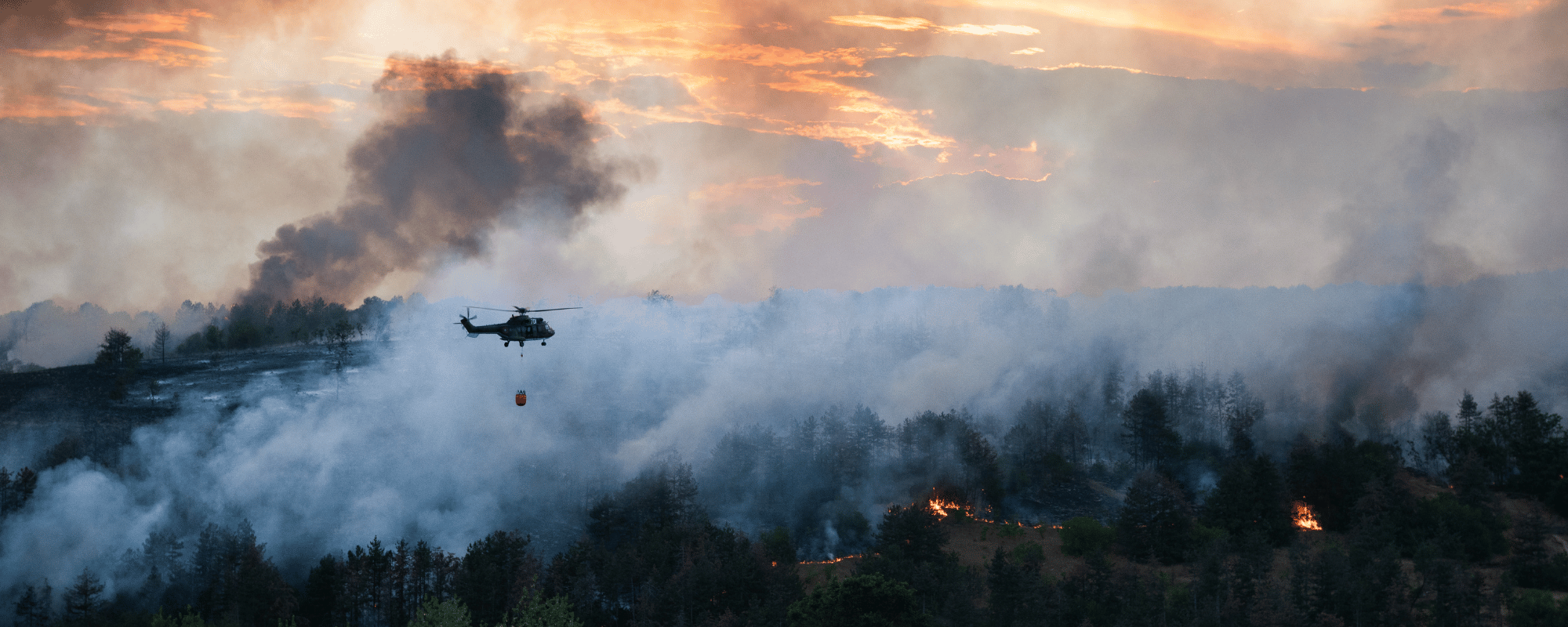
The total cost of a bushfire is difficult to measure: how can a dollar figure be put on a lost home full of treasured family photos and keepsakes? Or the loss felt when bushland alive with bird song and cultural significance becomes silent and blackened. Let alone the loss of loved ones, like on Black Saturday 2009 when 173 people’s lives were devastatingly cut short.
Some losses cannot be counted. Those that can be measured are growing.
New economic modelling commissioned by Emergency Leaders for Climate Action quantifies that burden in the most up-to-date figures with bushfires now costing the Australian economy a staggering $6 billion a year on average. Cutting pollution from coal, oil and gas faster and more deeply worldwide can limit how severe future bushfires become, while greater government investment in preparedness can reduce their cost. Without stronger action, bushfires are projected to cost more than $180 billion over the next 30 years.
Key findings
1. New modelling shows bushfires will cost Australia an average of $6 billion a year over the next 30 years, as climate change drives more frequent major fires.
- The $6 billion bill includes lost homes (17%), damaged businesses and public buildings (20%), harm to health and wellbeing (32%), lost trade (25%) and lost work (6%).
- This is the first national study to show what cutting that damage is worth: making fires a fifth less damaging could protect more than 5,600 jobs every year.
- Insurance data shows bushfire years and events costing more than $500 million in insured losses are already more frequent than 25 years ago.
- The modelling factors in a new era of climate-fuelled disasters, with major fires striking every three to four years as pollution from coal, oil and gas worsens fire weather.
- Actual costs are likely to be higher, as the modelling excludes anything that can’t be accurately quantified such as the loss of wildlife, damage to ecosystems or loss of cultural heritage.
2. Climate pollution has driven a step change in bushfires, making them more ferocious, damaging and costly.
- Deadlier days: Southeast Australia now experiences 14 more days a year of extreme fire weather than before 1998.
- More often: Victoria’s worst fires used to hit once in a generation, or about 40 years apart. Three have struck in the past 18 years.
- Fire storms: Recorded extreme fire-generated storms have risen six-fold, from 20 in 1983–2003 to 121 in 2004–2024.
- Dry lightning: Forests in southeast Australia recorded 50% more dry lightning strikes in 2000–2016 than in the previous two decades, sparking more remote fires.
- Higher losses: Almost half of the 14,000 homes lost to bushfires in Australia since 1901 were destroyed after 2001.
3. The next two summers pose a significant risk to communities, as a hotter climate and strengthening El Niño collide.
- The El Niño underway is tracking as the strongest on record, and comes on top of the highest levels of climate pollution in human history.
- In some high risk areas, insurance premiums have risen by as much as 400% after major fires, and some properties can’t get bushfire cover at all, leaving families exposed when the next fire hits.
- Many people also underestimate the risks: just before the 2026 Victorian fire season, the Country Fire Authority found half the residents in bushfire-prone areas didn’t view bushfires as a threat.
- Inquiries have found face-to-face community engagement through local brigades is highly effective, but faces resourcing challenges.
4. Firefighters are facing longer, fiercer fire seasons with fewer volunteers and less backup across jurisdictions.
- Australia had 10,336 fewer firefighting volunteers in 2023/24 than four years earlier, while paid positions grew by only 433.
- Fire seasons are 21% longer than in 1979, which is shrinking the window available for hazard reduction burning and limiting the ability of states and territories to assist each other during major fires.
- Our fire seasons also increasingly overlap with North America’s. During Black Summer, 11 of the 12 large air tankers Australia used came from overseas.
- Every extra firefighter, aircraft and early warning counts: in NSW during Black Summer, firefighters saved almost six homes for every one lost.
5. Better preparation could save lives and billions of dollars, while cutting climate pollution will limit how bad fires become.
- The same modelling found that the more bushfire damage we prevent through better preparation, the more jobs and income we save.
- Governments can help communities prepare by finalising and funding a detailed National Adaptation Plan, including measures to:
- ensure communities have access to the knowledge and information they need to co-develop solutions to locally identified risks.
- retrofit homes at highest risk to the national bushfire standard, at an estimated average cost of $39,466 per home;
- ensure at least 48 hours of backup power for mobile towers in high-risk areas, so warnings and emergency calls get through;
- invest in early detection and rapid response to stop fires before they get out of control; and
- build a sovereign aerial firefighting capability that reduces our reliance on overseas aircraft, as fire seasons increasingly overlap.
- To help limit how bad fires become, the Australian Government must cut climate pollution from coal, oil and gas further and faster, by:
- strengthening the Safeguard Mechanism, so big polluters can’t use loopholes and offsets to delay pollution cuts;
- stopping approvals of new or expanded coal and gas projects; and
- capping the diesel fuel tax handout to big mining corporations to reinvest the savings in better preparation.
The bushfire modelling used in this report was prepared by ConnellGriffin. Their full technical report is available here.
